How to Define the Required Sensing Area for Pressure Mapping
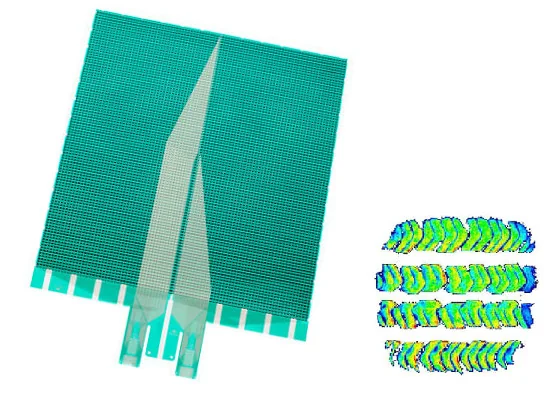
Define active coverage from the contact footprint, expected movement, fixture tolerances, sensor outline and tail-routing constraints.
Build a practical path from the contact interface to a compatible sensor, acquisition and analysis configuration. Start with a foundational guide or browse by the decision you need to make.
Use this content center to understand the complete measurement chain, choose a sensor around the real interface, balance pressure range with spatial detail, and classify static or dynamic events. The published guides explain decision methods and limits; final sensor, reader and software specifications are confirmed for the application before quotation.
Follow the full chain from a thin-film sensor array at the contact interface through compatible data acquisition hardware to pressure mapping and analysis software. Learn what a pressure map can show, how it differs from other methods, and which application details shape configuration.
Read the foundational guideEach resource is a maintained editorial page with a review date, explicit interpretation boundaries and links to the next useful step.
Define active coverage from the contact footprint, expected movement, fixture tolerances, sensor outline and tail-routing constraints.
Separate static-footprint, slow-rolling and dynamic-rolling requirements before defining placement and acquisition.
Define the sealing interface, sensor placement, clamp loading and result boundaries before configuration review.
Define the stack or module interface, sensor placement, fixture loading and result boundaries before configuration review.
Understand the three-part sensor, reader and software chain, how a pressure map is formed, and what the result can and cannot establish.
Use ten practical factors to define coverage, range, spatial detail, physical fit, environment, routing and compatibility before choosing a sensor direction.
Learn why maximum values should not be merged across configurations and how to balance useful pressure window, coverage, pitch and matrix detail.
Classify sustained, changing, repeated and transient events, then connect timing to matrix, acquisition, recording, trigger and output decisions.
Application guides connect the general selection method to one interface and one engineering decision without presenting customer cases or performance guarantees.
Review the footprint, motion condition, sensor fixation, acquisition needs and interpretation limits.
Review sealing geometry, sensor insertion, clamp loading, configuration factors and interpretation limits.
Review sensor placement, stack and fixture inputs, loading modes, configuration factors and interpretation limits.
Technical Guides provide maintained selection and measurement explanations. Application Insights connect those methods to specific interfaces after each page has sufficient evidence and useful depth. Technical Updates will document material changes to published guidance when there is a meaningful update. Only published pages are linked.
Use the guides to define the interface, loading, event and required output, then prepare the application for review.
Start application evaluationPrefer email? Reach us at info@pressmapper.com